
Niagara is a special place for hydroelectric power, as it was really the birthplace for mass electrical transmission across the province, and the continent.
Nikola Tesla partnered with George Westinghouse and the Westinghouse Electric and Manufacturing Company, and in 1893, Westinghouse was awarded the contract for a hydroelectric power station at Niagara Falls. In 1895, electricity was transmitted to a factory in the city, and all the way to Buffalo a year later. This marked the first successful deployment of hydroelectric power transmitted over long distance using alternating current, and the final nail in the coffin for rival Thomas Edison’s direct current systems.
On the Canadian side, American lawyer William Birch Rankine co-founded the Cataract Construction Company in 1889, which constructed the DeCew Falls Generating Station in 1898. This supplied two transmission lines to a substation in Hamilton, where it was distributed to streetlamps, building elevators and the Hamilton Street Railway. Rankine also created the Canadian Niagara Power Company in 1892, which completed the Canadian Niagara Power Company Generating Station in 1905. This plant generated power at 25 Hz and was geographically located in a less efficient than subsequent hydro, so it ceased operation in 2006.
At this point, power production in the area was mostly a private affair. But with much pushing from Adam Beck, then-MPP for London, the Government of Ontario created the Hydro-Electric Power Commission of Ontario (Ontario Hydro) in 1906. 15 years later, it finished construction of the Queenston-Chippawa Hydroelectric Plant (now the Sir Adam Beck Hydroelectric Generating Stations). This was, at the time, the largest hydroelectric generating station in the world. In addition to shaping the transmission system found in Niagara today, it has also highly modified the hydrology of the Niagara and Welland Rivers.
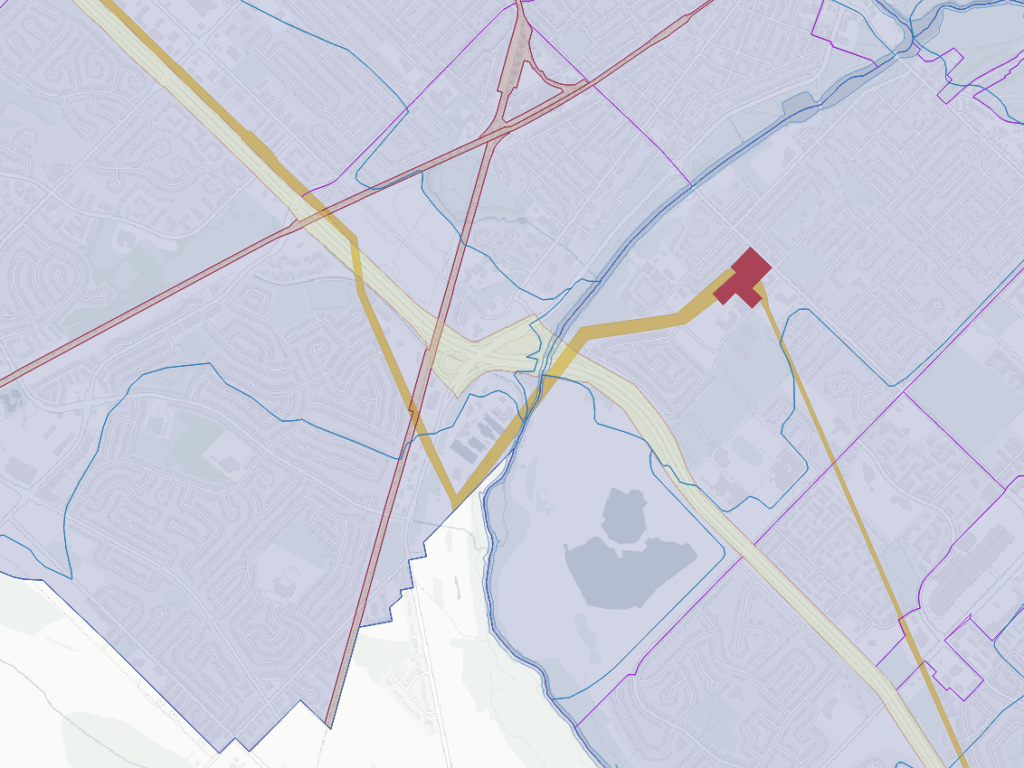
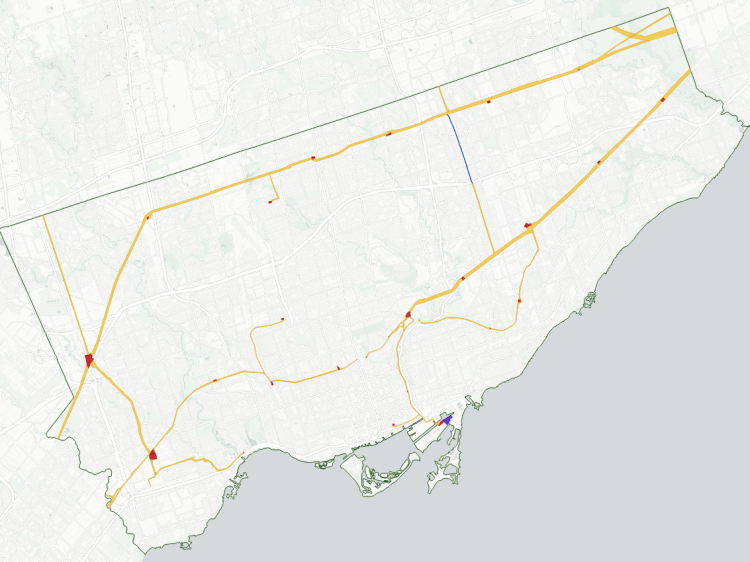
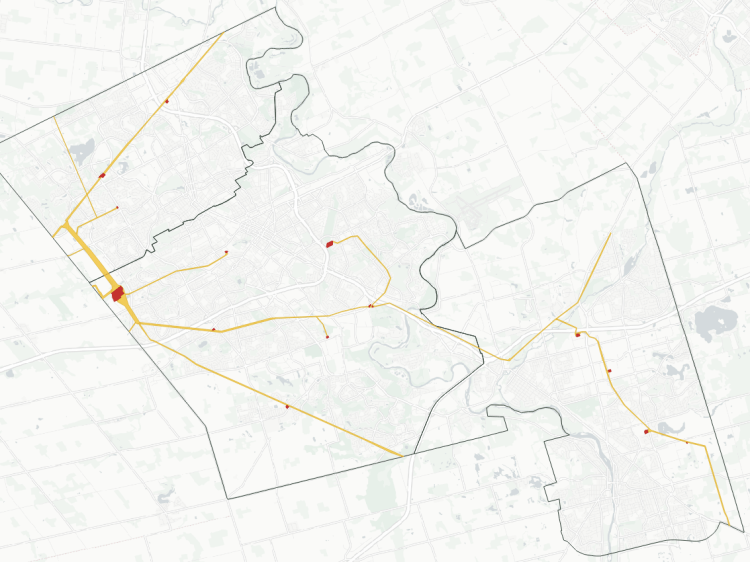
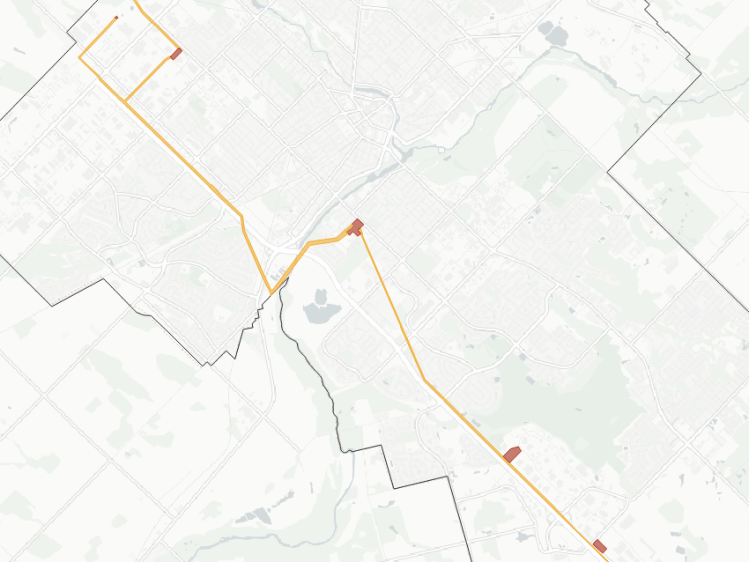
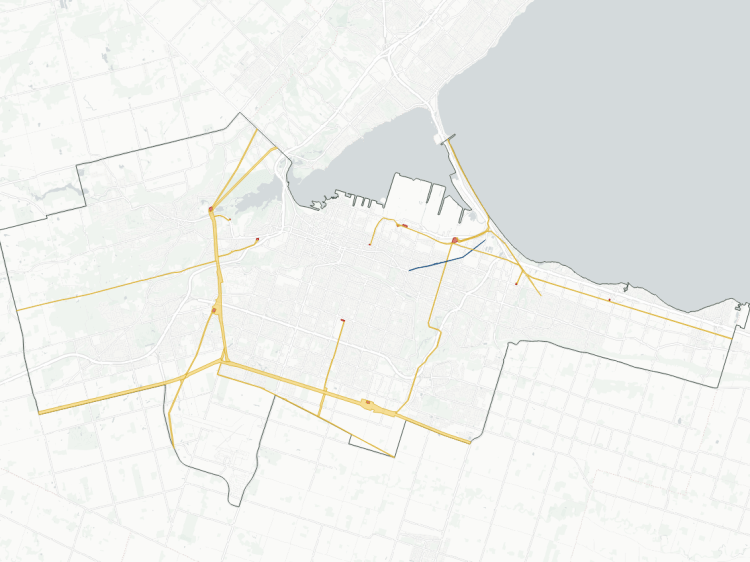
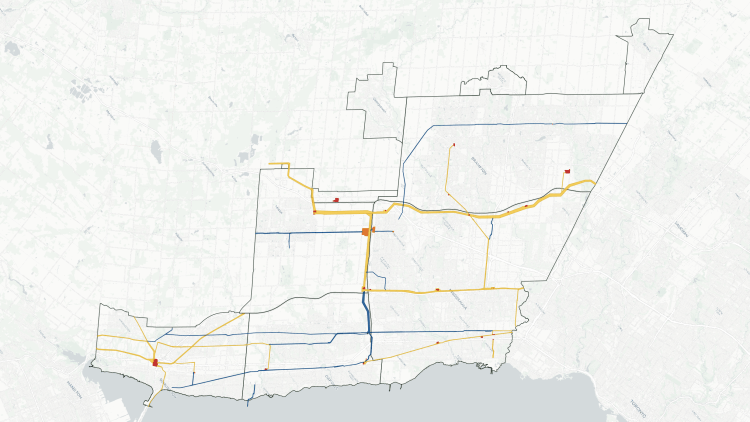
Today, these generation stations are the foundation of electric utility corridors coming out of Niagara region to the rest of the province, as well as interconnections to the United States. Mapping and tables are provided below, and this page will be expanded with more documentation of the corridors.
Notes and Disclaimers
- This is interpretive and not based on official property ownership or rights information from any utility or government entities. This data is provided ‘as is’; please refer to the licenses and additional disclaimers at the Open Data page.
- Some utility corridors are not plainly defined by property boundaries, and may cross or abut private property, roadways and railways. Some interpretive liberties were taken. Furthermore, corridors were drawn in an estimated manner outside of the City of Niagara Falls, as parcel data is not publicly available.
- Pipelines are often found within hydro corridors. These are identified primarily as hydro corridors, while pipeline corridors are identified as corridors where hydro lines are not present. Identifying a hydro corridor does not confirm the presence or absence of pipelines.
- While this page advocates for greater public access, utility corridors are private property and this page does not suggest they are all publicly accessible. Please observe all signage respecting access and activities permitted within these corridors. Remember that high voltage power lines and high pressure pipelines can be dangerous to you and the environment.
- History Sources:

This dataset is available in multiple formats through the Open Data Portal

 Metroscapes